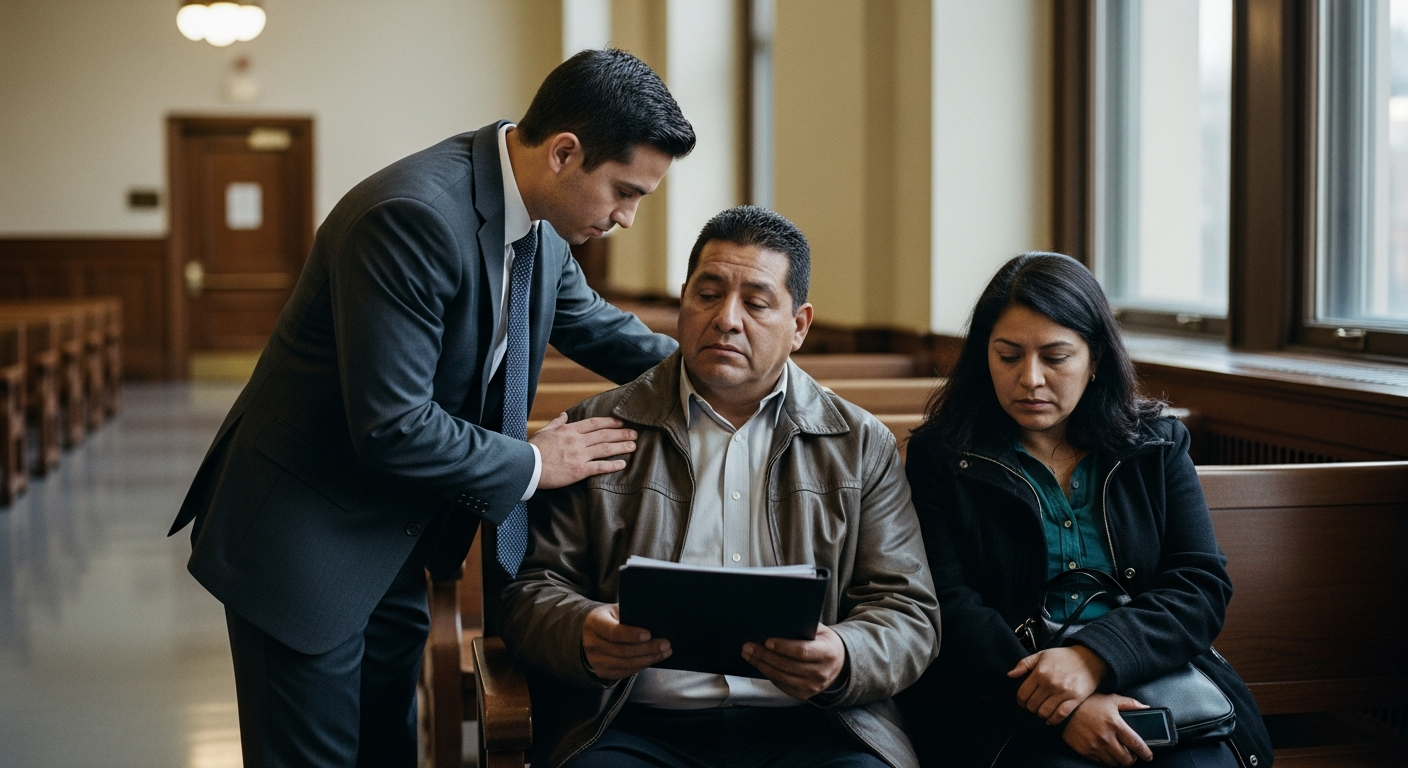
Deportation Defense
Cancellation of removal, asylum at the border, bond hearings, BIA appeals, and circuit-court petitions for review.
What is at stake
Removal proceedings are not paperwork. They are a federal trial in which the U.S. government's lawyer is trying to deport you. There is no right to appointed counsel in immigration court. Unrepresented respondents are removed at roughly five times the rate of represented respondents (TRAC, 2026). Mendoza Immigration appears in EOIR courts in San Francisco, Sacramento, and Phoenix.
Forms of relief in immigration court
- Cancellation of removal for LPRs (INA § 240A(a)) — five years of LPR status, seven of continuous residence, no aggravated felony.
- Cancellation of removal for non-LPRs (INA § 240A(b)) — ten years of physical presence, good moral character, no disqualifying conviction, and exceptional and extremely unusual hardship to a U.S. citizen or LPR spouse, parent, or child.
- Asylum, withholding of removal, and CAT protection.
- Adjustment of status in court when an I-130 is approved and a visa is current.
- 212(c) and 212(h) waivers for older convictions.
- Voluntary departure to preserve future eligibility.
- Motions to terminate, reopen, or reconsider under 8 C.F.R. § 1003.23.
Why admissibility analysis controls every defense
Every form of relief in immigration court requires the respondent to establish — or to be eligible to be granted — admissibility. A single conviction can transform a winnable cancellation case into a mandatory removal:
- An aggravated felony under INA § 101(a)(43) bars cancellation, asylum, and most discretionary relief.
- A crime involving moral turpitude can trigger inadmissibility, deportability, or both.
- A controlled substance conviction triggers INA § 212(a)(2)(A)(i)(II) — even a single guilty plea to simple possession can bar relief absent narrow exceptions.
- False claim to U.S. citizenship under INA § 212(a)(6)(C)(ii) — most clients did not realize a job application or voter form they signed years ago could be characterized this way.
This is why post-conviction relief — vacating the underlying state conviction under Padilla v. Kentucky — is often the first move in a deportation defense. Without an attorney coordinating immigration and criminal counsel, that opportunity is missed.
Bond and appeals
We litigate custody redetermination hearings under 8 C.F.R. § 1003.19, Matter of Joseph hearings for mandatory-detention challenges, BIA appeals, and circuit-court petitions for review when the immigration judge errs.
Attorney services
Have an attorney review your case
Start with a free consultation, or get direct attorney attention right away—instant written document review, a live mock interview on camera, or a live video call.
Document Review
Talk to an Attorney Live
Usually online weekdays 9–5 PT. Until then, here are two ways to get attorney attention without waiting:
Legal Citations
Keep reading
Related Resources
Yakuza — Traditional Irezumi Bodysuit
OFAC-sanctioned Yakuza syndicates; in Japanese-national context the full irezumi bodysuit is a strong affiliation marker.
Christian Cross / Crucifix
Universal Christian devotional imagery; almost never gang-affiliative absent surrounding indicators.
Butterfly (Decorative)
Among the most-tattooed images globally; standing alone, no gang inference.
Black Disciples — Pitchfork and 'BD'
Folk Nation gang sharing significant iconography with Gangster Disciples.
Santa Muerte (Folk Religious)
Fastest-growing folk-religious figure in the Americas; venerated by 10-12 million devotees. Often misread as a cartel marker.