Naturalization & Citizenship
From Form N-400 to the oath ceremony — citizenship for permanent residents, plus derivation and acquisition claims.
The five statutory pillars of naturalization
INA § 316(a) requires every N-400 applicant to prove:
- Lawful permanent resident status for the qualifying period (five years, or three under INA § 319(a) for spouses of citizens).
- Continuous residence in the United States — broken by any single absence of six months or more, presumptively broken by absences of one year or more.
- Physical presence for at least half of the qualifying period.
- Good moral character for the entire statutory period (and, in practice, beyond).
- English and civics knowledge — with limited age and disability exemptions under INA § 312(b).
The trap most applicants don't see
Filing an N-400 is also an invitation to USCIS to re-examine your underlying green card. If the original adjustment or consular case had a problem — an old fraud, an undisclosed arrest, a marriage that ended early, a public-charge issue — the agency can deny naturalization and place you in removal proceedings under INA § 318. This is not theoretical: in 2026, denaturalization referrals are at a 25-year high.
A sound N-400 strategy starts by re-running the admissibility analysis under INA § 212 as if the client were applying for the green card today, including:
- Every arrest, citation, deferred adjudication, or expungement (the categorical approach matters)
- Every prior immigration application and the answers given on each
- Tax filing history and any failure to file as a worldwide-income resident
- Selective Service registration for males who lived here between 18 and 26
- Any travel exceeding 180 days as a green-card holder
If any of those raise a flag, we fix it before USCIS sees the file.
You may already be a U.S. citizen
Many clients are surprised to learn they are citizens by acquisition at birth (INA § 301) or by derivation through a parent's naturalization before age 18 (INA § 320). We routinely file Form N-600 Certificates of Citizenship for clients who never needed to naturalize at all.
Our N-400 service includes
- A pre-filing audit covering travel, criminal, tax, and selective-service issues
- Civics and English interview preparation in both English and Spanish
- Representation at the USCIS interview
- N-336 administrative review and federal-court § 1421(c) review when USCIS errs
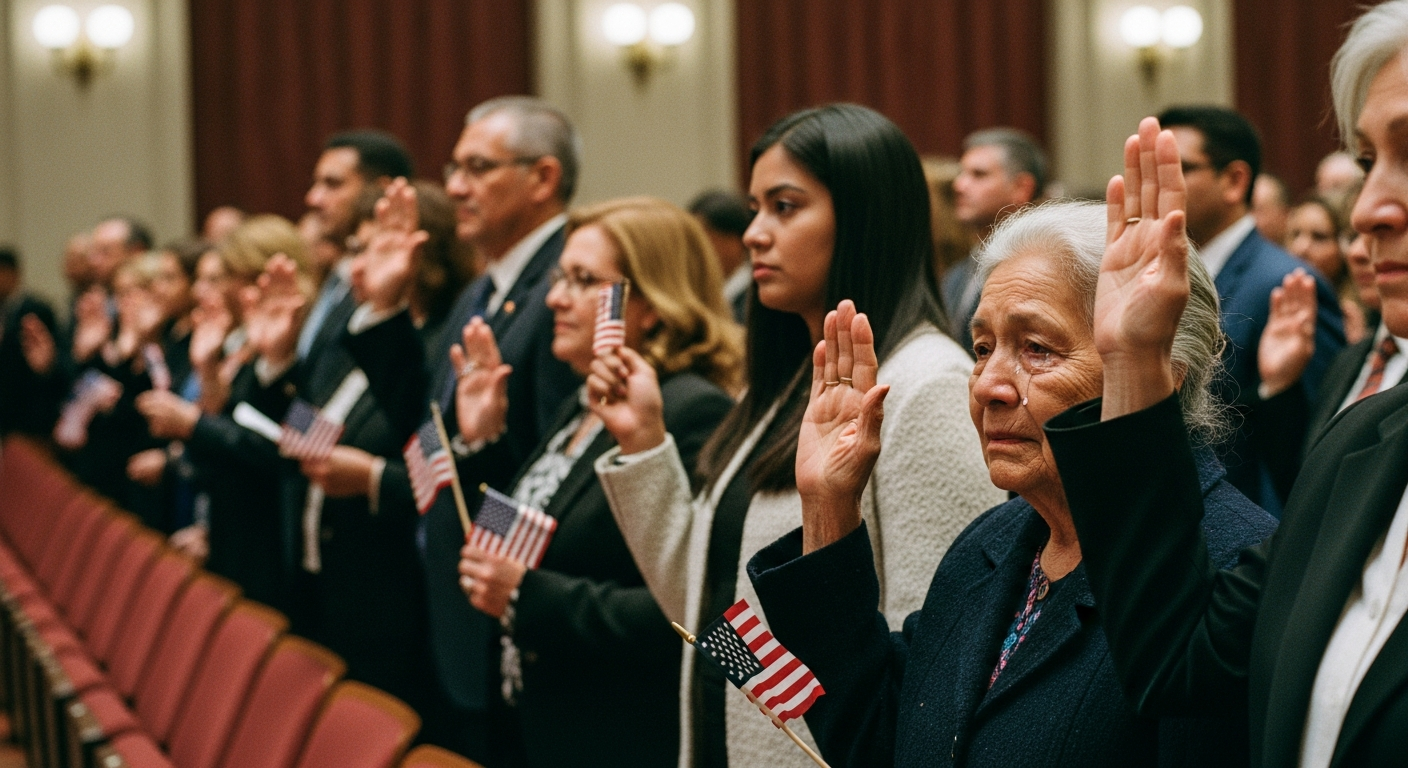
- Same-day oath ceremony coordination
Legal Citations
Keep reading
Related Resources
I was born abroad — am I already a U.S. citizen and don't know it?
Possibly — INA § 301 (acquisition at birth) and INA § 320 (derivation through a parent) automatically confer citizenship in many cases, and you would apply for proof on Form N-600 rather than filing an N-400.
Will I lose my original citizenship if I naturalize as a U.S. citizen?
Not under U.S. law — the United States recognizes dual citizenship and does not require renunciation, but your country of origin may have its own rules that revoke citizenship upon naturalization elsewhere.
Will an old arrest or DUI block my naturalization?
Possibly — the statutory good-moral-character period is the 5 years (3 for spouses of citizens) before filing, but USCIS examines arrests beyond that window for context and a single conviction can be disqualifying.