Rosary, Praying Hands, and Religious Tattoos
Religious tattoos are commonly misread as gang indicators in current enforcement — documentation of faith tradition rebuts the inference.
Educational only — not legal advice. Images are stylized reference illustrations, not photographs of identifiable individuals. Tattoo meanings depend on context, location, personal history, and consular discretion under 9 FAM 302.5 and the USCIS Policy Manual. A single tattoo rarely determines an immigration outcome — but USCIS officers, consular officers, and ICE agents may treat certain markings as evidence of gang affiliation, including during adjustment of status interviews, naturalization interviews, asylum interviews, and credible-fear and reasonable-fear screenings. If you have any of these tattoos and face a USCIS interview, visa interview, removal proceedings, or detention, contact a licensed immigration attorney before any government interaction.
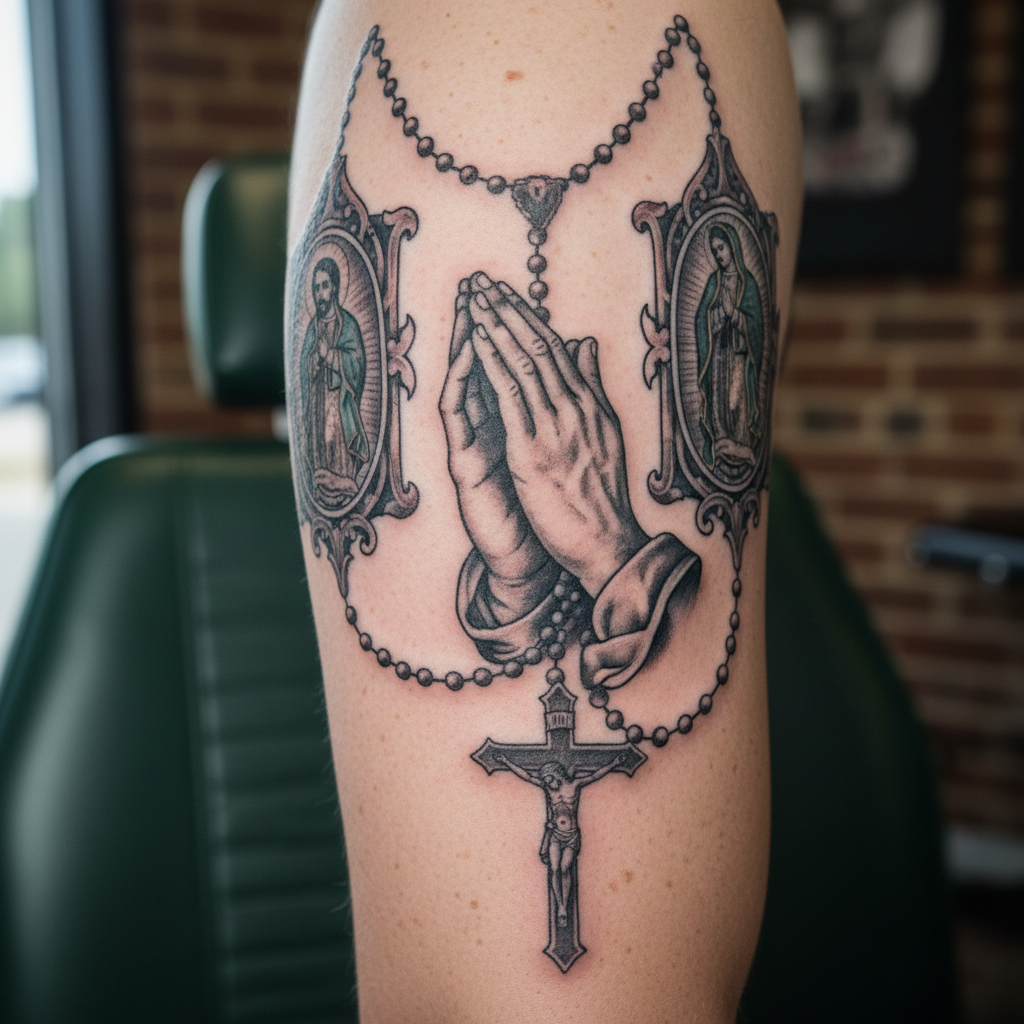
What this symbol depicts
Rosary beads draped on the chest or wrist, praying hands, crosses, or images of saints — typically with no gang lettering.
What officers may infer
Generally not flagged in well-trained units. However, in TdA and MS-13 enforcement contexts post-2025, rosary tattoos have been incorrectly cited as gang indicators in some removal cases.
Mitigating context
Religious tattoos are protected expression. Documentation of family religious tradition, baptism records, and parish letters strongly rebut any gang inference.
Where it's seen
Why this matters
Rosary tattoos are common across Catholic Latin America. In 2025, several reported cases involved Venezuelan migrants flagged as Tren de Aragua based partly on rosary tattoos. Civil-rights advocates and Catholic dioceses have publicly objected.
What helps if questioned
- Baptism, confirmation, or first-communion certificates
- Letters from a parish priest
- Family photos showing similar religious practices
Frequently asked
Will having this tattoo automatically deny my visa or trigger removal?
No. Under 9 FAM 302.5, consular officers consider tattoos as one factor among many. Religious tattoos are protected expression, but you should still be prepared to document the tradition behind the tattoo.
What evidence helps establish religious intent?
Baptism, confirmation, or first-communion certificates; a letter from a parish priest; family photos showing similar religious practices; and country-conditions evidence about the tradition in your community.
Should I cover the rosary tattoo before my interview?
Concealment can backfire if discovered. Most practitioners advise being prepared to explain the religious meaning openly with documentation in hand. Speak with an immigration attorney before your interview.