H-2A & H-2B Employer Compliance
Temporary agricultural and non-agricultural worker programs — DOL labor certification, USCIS petitions, worker disclosures, and Wage and Hour Division audit defense.
H-2A and H-2B are temporary worker programs under INA § 101(a)(15)(H)(ii) and INA § 218. Compliance requires (1) a properly certified labor certification from DOL, (2) a USCIS I-129 approval, (3) worker disclosures and notices under DOL regulations at 20 C.F.R. § 655 and 29 C.F.R. §§ 501 and 503, and (4) a public-access file the employer can defend under audit. Most enforcement actions are not fraud cases; they are documentation cases that the employer could have won if the paperwork existed.
What's at Stake
H-2A and H-2B are the two largest U.S. temporary worker programs by volume. They are also the most aggressively enforced. The Department of Labor's Wage and Hour Division (WHD) audits both programs continuously. The Office of Foreign Labor Certification (OFLC) audits a substantial portion of pending labor certifications. ICE Homeland Security Investigations (HSI) conducts I-9 inspections at H-2 employers. State labor commissioners pursue parallel state-law claims. Each enforcement vehicle has its own deadlines, its own evidentiary standards, and its own remedies.
The stakes are not theoretical. WHD penalties under 29 C.F.R. § 501 (H-2A) and § 503 (H-2B) include back wages, civil money penalties, and debarment from the program for 1 to 3 years — long enough to end a seasonal agricultural operation. ICE Form I-9 fines run up to thousands of dollars per worker. State-law claims add private rights of action with attorneys' fees and treble damages in some states.
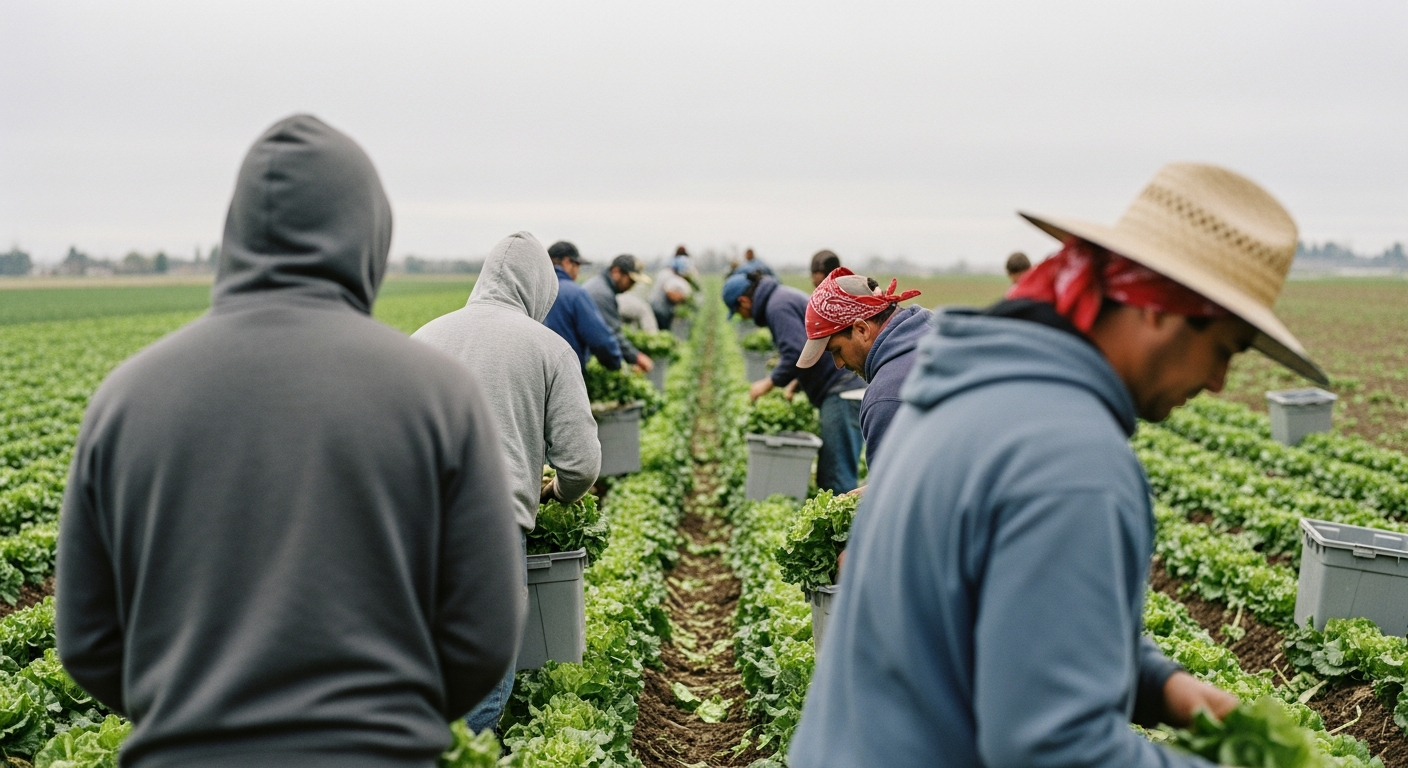
Consider a Salinas Valley grower, Vasquez Farms, that has run an H-2A program for fifteen years. A 2024 WHD audit finds that the housing inspection certificate on file was a year out of date and that the bus contractor that transported workers from the airport did not carry the required liability insurance the employer attested to in the ETA-790. WHD assesses a back-pay order, a CMP, and a one-year debarment. The farm cannot fill its 2025 crew. The harvest is lost. The owner-operator we represent inherited the case with three weeks before the harvest window.
Consider a Phoenix landscaping company, GreenScape, that has run H-2B for ten years. A 2024 OFLC audit response is filed late because the immigration assistant left the company. The case is denied. The 90-day refile clock under the H-2B regulations creates a gap that costs the company two contracts. We have litigated this case before BALCA and won — but the path is straightforward only when documentation is intact.
The work is documentation, sequencing, and audit-readiness. Every employer who runs H-2 programs should be running them as if a WHD investigator walks in on Monday morning. Most are not.
The Legal Framework
H-2A: agricultural workers
The statutory framework is INA § 218 and 8 C.F.R. § 214.2(h)(5). DOL regulations at 20 C.F.R. § 655 Subpart B govern the labor-certification process. Enforcement is at 29 C.F.R. § 501.
Key required elements:
- ETA-790 / 790A Agricultural Clearance Order describing the job opportunity, wages, housing, transportation, meals, and tools.
- State Workforce Agency (SWA) recruitment during a specific window prior to the date of need.
- Adverse Effect Wage Rate (AEWR) wage compliance — the higher of the AEWR, prevailing wage, federal minimum, or state minimum.
- Free housing that meets either federal OSHA temporary-labor-camp standards or HUD-equivalent state standards.
- Three-fourths guarantee — the employer must guarantee work for at least 3/4 of the contract period.
- Transportation reimbursement — inbound and outbound, plus subsistence during travel.
- Worker disclosures — Form WH-501 (in the worker's language) at the time of recruitment.
- Public Access File maintained for three years.
H-2B: non-agricultural temporary workers
Statutory framework is INA § 101(a)(15)(H)(ii)(b). DOL regulations are at 20 C.F.R. § 655 Subpart A. Enforcement is at 29 C.F.R. § 503.
Key required elements:
- ETA-9141 Application for Prevailing Wage Determination.
- ETA-9142B Application for Temporary Employment Certification.
- Recruitment under the H-2B Final Rule, including SWA job order, two newspaper ads (or other prescribed media), notice to former U.S. workers laid off in the prior year, and bargaining-representative notice.
- Wage compliance at the prevailing wage determined by OFLC.
- Worker disclosures — Form WH-516 (in the worker's language).
- Public Access File maintained for three years.
USCIS petition (both programs)
Once the labor certification is granted, the employer files Form I-129 with USCIS. Approval results in consular notification for visa issuance abroad. The H-2A and H-2B Country List updated annually by DHS limits which countries are eligible without an exception filing.
What WHD looks at on audit
In the field, WHD investigators look at: actual wages paid vs. attested wage; hours worked vs. hours guaranteed; housing conditions vs. attested standards; transportation actually provided vs. attested; deductions taken from wages; documentation of contracts with bus companies, housing providers, and recruiters; the public access file; the I-9s; and worker-interview consistency with employer attestations. Discrepancies become CMPs, back wages, and debarment.
Our Approach
The Mendoza Immigration approach
We treat H-2 work as year-round compliance for the employer, not a single seasonal filing. The employer who calls us in March to file an H-2A for an April need date is the employer who is going to fail an audit. The employer who calls us in September to plan the next year's program is the one who passes.
For planning, we run a written compliance audit of every operational element the labor certification will rely on: housing units (with current inspection certificates and capacity calculations), transportation contractors (with insurance certificates and licensure), recruiters and labor contractors abroad (with FLSA and FLCRA registrations as required), wage practices (with payroll documentation), and prior-year recordkeeping (the public access file). Gaps are closed before the recruitment window opens.
For filing, we draft the labor certification with the recruiting strategy already laid out and the recruitment documentation already templated. SWA job orders are placed on time. Ads run on schedule. Former-U.S.-worker notice goes out documented. The audit response, if there is one, is ready before the request arrives.
For operational compliance, we work with the employer on worker disclosures in the workers' language, on the Public Access File, on I-9 onboarding that complies with M-274, and on payroll practices that survive WHD inspection. We are not afraid to tell an employer to fix a pay practice that is technically common in the industry but indefensible under audit.
For audit defense, we lead the engagement from the first WHD or OFLC contact letter. Investigators do not get unsupervised access to records or workers. Settlements are negotiated, not signed under pressure. Where debarment is on the table, we argue the Vega-Mejia-style mitigation framework and the proportionality of the proposed remedy.
Check Your Eligibility
Walk through the cluster questions to see what relief you may qualify for — no contact information required.
Why eligibility is only half the story
Did you obtain a Department of Labor temporary labor certification (ETA-9142A for H-2A, ETA-9142B for H-2B) before filing the I-129?
Are you paying at least the highest of: AEWR (H-2A) or prevailing wage (H-2B), the federal/state minimum, the agreed-upon contract rate, or the actual wage paid to similarly employed U.S. workers?
(H-2A only) Are you providing free housing that meets OSHA 29 C.F.R. § 1910.142 plus daily transportation between housing and worksite?
Did you actively recruit U.S. workers, contact former U.S. employees, and document every applicant's lawful disposition?
Are your I-9s and E-Verify records current, complete, and audit-ready for every active H-2 worker?
Have your named H-2 workers been screened for inadmissibility — prior overstays, prior visa refusals, criminal records, or 3/10-year bars?
Are you tracking the 3-year H-2 maximum stay, and do you have a portability or change-of-employer plan for workers approaching the limit?
Frequently Asked Questions
Recent Developments
How does the H-2B cap work and will I get supplemental visas in 2026?
The H-2B annual cap is 66,000 (33,000 per half-year), filled within days of opening, but DHS releases 30,000–65,000 supplemental visas mid-fiscal-year — and 2026 supplementals were announced in November 2025.
Can H-2 workers be charged a recruitment fee?
No — both H-2A (20 C.F.R. § 655.135(j)) and H-2B (20 C.F.R. § 655.20(o)) flatly prohibit any worker from paying recruitment fees, and the 2025 H-2 Modernization Rule extended employer liability to fees charged by foreign recruiters even without the employer's knowledge.
What housing, transportation, and wage obligations does an H-2A employer actually have?
H-2A employers must provide free compliant housing, inbound/outbound and daily transportation, the AEWR (or higher prevailing wage), workers' comp, tools and equipment, and a 3/4 contract-hour guarantee — and DOL audits these systematically.
DOL is threatening to debar my farm from the H-2A program — what can I do?
Debarment is appealable and defensible — request an administrative hearing under 29 C.F.R. § 501.20 within 30 days, build the mitigation record (corrective action, good-faith compliance, worker make-whole), and litigate the willfulness finding that drives the debarment length.
Is my seasonal labor need H-2A or H-2B?
H-2A is for agricultural work (planting, harvesting, livestock); H-2B is for non-agricultural seasonal labor (landscaping, hospitality, seafood, construction). The choice is mandatory, not strategic — picking wrong invalidates the petition.